

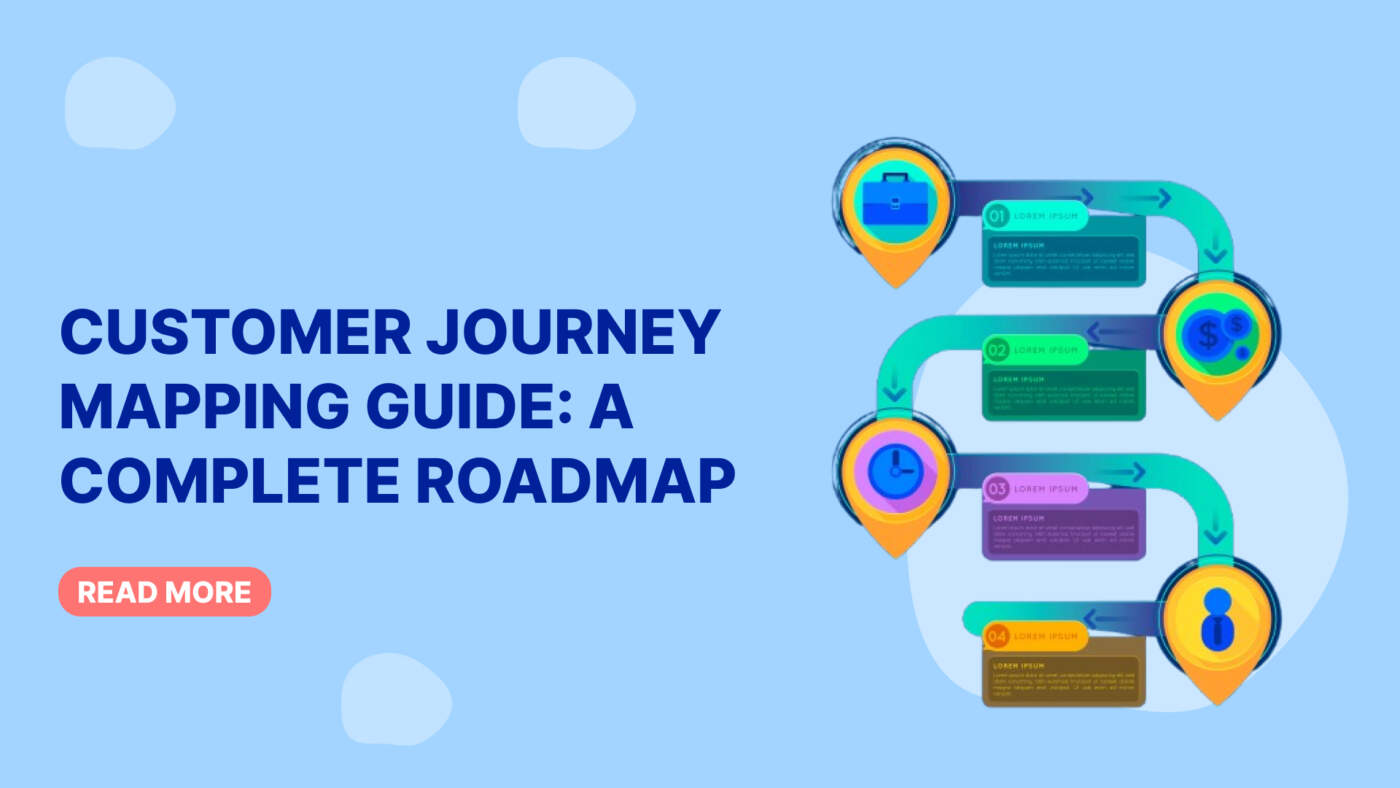

Introduction
Understanding your customers goes far beyond knowing their age, location, or preferences. What truly matters is how they interact with your brand at every stage—from first discovery to long-term loyalty. This is where a well-structured customer journey map becomes essential.
A customer journey mapping guide helps businesses visualize the entire customer experience in a meaningful and actionable way. It highlights every interaction, emotion, and decision point, giving you a clearer picture of what your customers actually go through. In an increasingly competitive market, delivering a seamless and personalized experience is no longer optional—it’s expected.
By mapping the journey, businesses can identify gaps, remove friction, and create experiences that not only satisfy customers but also build lasting relationships.
What is Customer Journey Mapping?
Customer journey mapping is the process of outlining every step a customer takes when interacting with your business. These steps include all touchpoints—whether it’s visiting your website, engaging with your social media, or contacting customer support.
But it’s not just about tracking actions. A good journey map also captures customer emotions, expectations, and challenges at each stage. This deeper level of insight allows businesses to better understand what drives customer decisions.
Instead of relying on assumptions, journey mapping provides a structured way to analyze real user behavior. It helps answer important questions like where customers lose interest, what influences their choices, and how their experience can be improved.

Why Customer Journey Mapping is Important
Customer journey mapping plays a critical role in improving overall business performance. When you clearly understand how customers move through your funnel, you can optimize each step to create a smoother and more engaging experience.
It also helps teams stay aligned. Marketing, sales, and support departments can work together with a shared understanding of the customer’s needs and expectations.
Most importantly, it shifts your approach from business-focused to customer-focused. This shift is key to building trust and long-term loyalty.
Here are two major benefits of customer journey mapping:
- It reveals pain points and obstacles in the customer experience, helping you fix issues that may be reducing conversions.
- It allows you to deliver more personalized and relevant interactions, improving customer satisfaction and retention.
Key Stages of the Customer Journey
Every customer goes through a series of stages before becoming a loyal advocate. Understanding these stages is essential for creating an effective journey map.
Awareness
At this stage, customers first come across your brand. This could happen through search engines, advertisements, or social media. They are just beginning to explore their needs and possible solutions.
Consideration
Here, customers evaluate your offerings and compare them with alternatives. They may read reviews, visit your website multiple times, or engage with your content.
Decision
This is the point where the customer decides whether to make a purchase. A smooth and trustworthy experience at this stage can significantly impact conversions.
Retention
After the purchase, the focus shifts to maintaining the relationship. Good customer service, follow-ups, and engagement strategies play a crucial role here.
Advocacy
Satisfied customers often recommend your brand to others. They leave positive reviews and become valuable promoters of your business.
Steps to Create an Effective Customer Journey Map
Building a customer journey map doesn’t have to be complicated if you follow a structured approach.
Start by defining your goals. Knowing what you want to achieve—whether it’s improving user experience or increasing conversions—will guide your efforts.
Next, gather customer data and create detailed personas. Understanding your audience is the foundation of an accurate journey map.
Then, identify all possible touchpoints where customers interact with your brand. This includes digital platforms as well as offline channels.
After that, map out customer emotions and experiences at each stage. This helps you see where improvements are needed.
Finally, analyze the journey and make necessary optimizations. A journey map should always be evolving based on new data and insights.
Common Challenges and Mistakes
While customer journey mapping is highly beneficial, many businesses struggle with its implementation.
One common mistake is relying too much on assumptions instead of real data. Without accurate insights, your map may not reflect the actual customer experience.
Another issue is making the map overly complex. While it’s important to include details, simplicity ensures that the map remains actionable and easy to understand.
Some businesses also fail to update their journey maps regularly. Customer behavior changes over time, and your strategies need to adapt accordingly.
Improving Customer Experience Through Journey Mapping
Customer journey mapping is one of the most effective ways to enhance user experience. By identifying friction points, you can make targeted improvements that have a direct impact on customer satisfaction.
For example, simplifying navigation on your website or improving response times in customer support can significantly improve the overall experience. Small changes often lead to big results.
It also helps you create consistent experiences across all channels. Whether a customer interacts with your brand online or offline, consistency builds trust and credibility.

Customer Journey Mapping and SEO
Customer journey mapping also supports your SEO strategy. When you understand what your customers are searching for at different stages, you can create content that matches their intent.
For instance, informative blog posts can target users in the awareness stage, while comparison pages and product guides can help those in the consideration phase.
This alignment improves engagement metrics such as time on site and bounce rate, which are important for search rankings. It also ensures that you attract the right audience to your website.
Conclusion
A well-planned customer journey map gives you a powerful advantage in today’s customer-driven world. It allows you to see your business from the customer’s perspective and make informed decisions that improve every interaction.
By focusing on real experiences and continuously refining your strategy, you can create a journey that not only meets expectations but exceeds them.
Businesses that invest in understanding their customers are the ones that grow sustainably. With the right approach and tools, you can transform your customer experience into a key driver of success. Companies like adsyzygy emphasize the importance of combining strategy, data, and creativity to deliver meaningful customer journeys that truly make an impact.
Leave a Comment