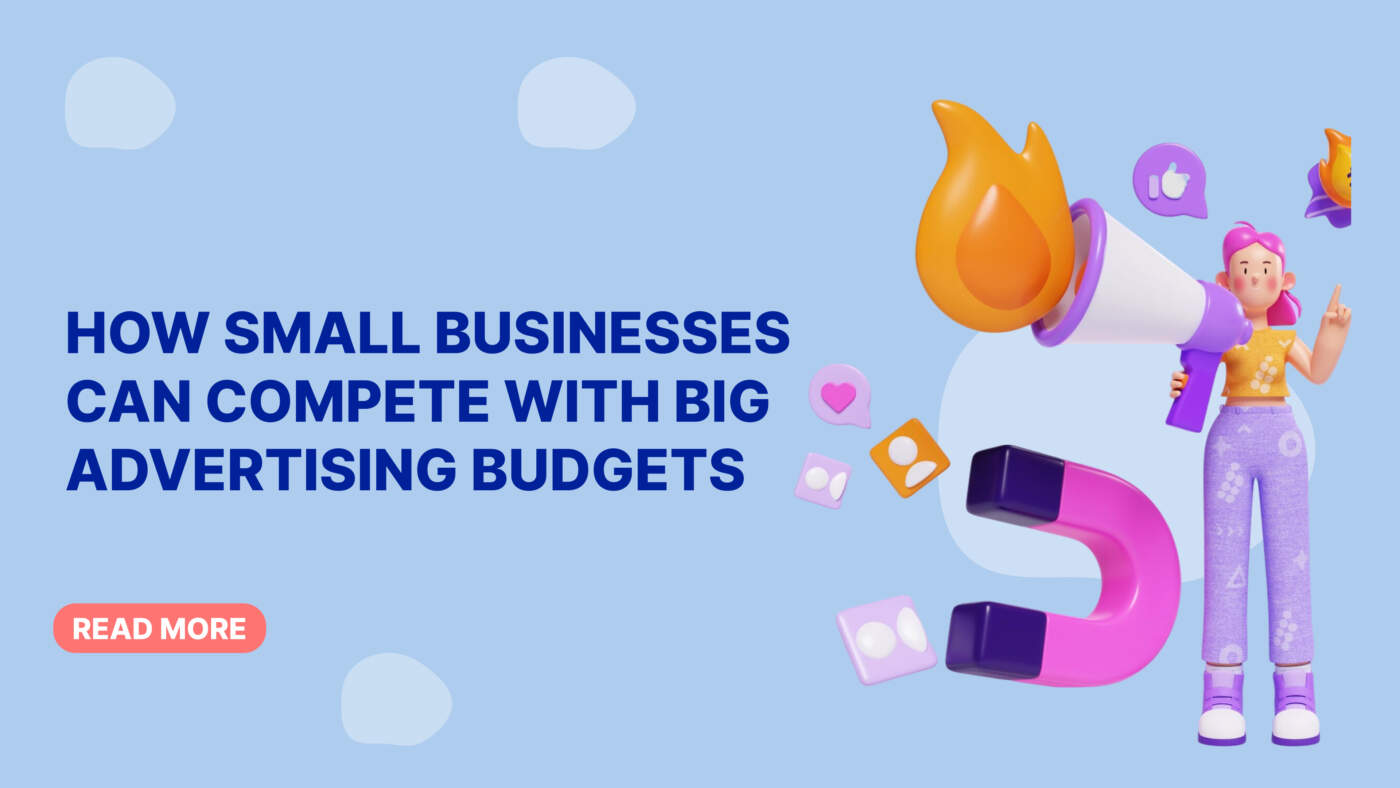

Running a small business can sometimes feel like entering a race where the other competitors have much bigger shoes, deeper pockets, and entire marketing teams behind them. Large companies can spend thousands or even millions on advertising campaigns, influencer partnerships, television commercials, billboards, and digital ads. So, how can a small business possibly compete with big advertising budgets?
The good news is that small businesses don’t need a bigger advertising budget to compete. They need a smarter strategy.
The digital marketing landscape has changed the way businesses reach customers. Today, a local business can use search engines, social media, content marketing, email campaigns, and targeted advertising to reach a highly specific audience without spending a fortune. Instead of trying to be everywhere, small businesses can focus on being visible in the places where their ideal customers are already looking.
Competing with larger brands isn’t about copying their marketing budget. It’s about using resources efficiently, understanding your customers better, and creating experiences that make people choose you over a bigger competitor.

Why Big Advertising Budgets Don’t Guarantee Success
It is easy to assume that the company spending the most money will automatically get the most customers. But advertising doesn’t work quite that simply.
A large advertising budget can buy more visibility, but visibility doesn’t always lead to conversions. If an advertisement reaches thousands of people who aren’t interested in the product or service, much of that budget is wasted.
Small businesses have an important advantage here: flexibility.
A small company can quickly test a campaign, identify what works, change its messaging, and move its budget toward the best-performing channel. Large organizations often have multiple approval stages, complicated processes, and long campaign timelines.
This means a small business can sometimes move faster than a major competitor.
The goal isn’t to make your business look bigger than it is. The goal is to make every marketing dollar work harder.
Focus on a Specific Audience
One of the biggest mistakes small businesses make is trying to market to everyone.
Large companies can sometimes afford broad campaigns because they have products designed for massive audiences. A small business usually doesn’t have that luxury—and it doesn’t need it.
Instead, identify your ideal customer.
Think about their age, location, interests, problems, buying behavior, and what motivates them to make a purchase. The more clearly you understand your audience, the easier it becomes to create advertising that speaks directly to them.
For example, a local fitness studio doesn’t necessarily need to advertise to every person in an entire city. It could target people within a specific radius who are interested in fitness, weight training, wellness, or healthy lifestyles.
That’s the power of targeted advertising.
Rather than spending ₹50,000 trying to reach 500,000 people, a business may achieve better results by spending a smaller amount reaching a highly relevant audience.
Make Local SEO Your Competitive Advantage
Local SEO is one of the most powerful tools available to small businesses.
When someone searches for “best restaurant near me,” “digital marketing agency near me,” “plumber in [city],” or another location-based service, they are often already looking for a solution.
That makes search visibility incredibly valuable.
A small business can compete by optimizing its Google Business Profile, website, local landing pages, reviews, business information, and location-based content.
Unlike traditional advertising, where you pay every time someone sees your message, organic search visibility can continue bringing potential customers to your business over time.
A strong local SEO strategy should include relevant location-based keywords, accurate business information, quality content, customer reviews, internal linking, and a mobile-friendly website.
Most importantly, don’t write content simply to insert keywords. Write content that actually answers customer questions.
Google’s algorithms are increasingly focused on useful, relevant experiences. Your content should do the same.
Use Content to Build Authority
Big companies often have huge content teams. But small businesses have something those teams may struggle to replicate: authentic expertise.
You know your customers. You understand their questions. You have real experience solving their problems.
Use that knowledge to create useful content.
A small business can publish blog posts, guides, videos, social media posts, FAQs, case studies, and customer stories. Over time, this content can help establish the business as a trusted source of information.
For example, a local interior design company could publish articles about budgeting for home interiors, choosing materials, common renovation mistakes, and design trends.
Someone searching for those topics may discover the company before they are even ready to buy.
That’s the beauty of content marketing. You’re not simply selling a product. You’re becoming part of the customer’s research process.
Compete Through Social Media, Not Celebrity Budgets
Social media can look intimidating when you see major brands working with celebrities and influencers. But small businesses don’t need celebrity-level campaigns to get attention.
Authenticity often works better.
People want to see the people behind a business. They want to understand how products are made, meet the team, see customer experiences, and learn what makes the company different.
A small business can use Instagram, Facebook, LinkedIn, YouTube, or other relevant platforms to create a direct relationship with its audience.
Behind-the-scenes videos, customer testimonials, educational content, product demonstrations, founder stories, and short-form videos can all help build familiarity.
The objective isn’t necessarily to gain millions of followers.
A business with 2,000 highly engaged followers can potentially generate more value than a business with 200,000 passive followers.
Spend Advertising Money Where It Matters
Small businesses should avoid spreading their advertising budget too thin.
Instead, identify the channels that consistently produce results.
For some businesses, Google Ads may generate strong purchase intent. For others, Instagram or Facebook advertising may work better for building demand. LinkedIn could be more appropriate for B2B businesses, while email marketing may be particularly effective for existing customers.
This is where performance marketing becomes valuable.
Track metrics such as clicks, leads, conversion rates, cost per lead, customer acquisition cost, and return on ad spend. Don’t judge a campaign purely by impressions or likes.
Two important principles can make a small advertising budget work harder:
- Target narrowly: Focus campaigns on specific audiences, locations, interests, search terms, or customer segments instead of paying to reach everyone.
- Optimize continuously: Test headlines, creatives, landing pages, offers, and audiences, then move more budget toward what produces actual business results.
A ₹10,000 campaign that produces profitable customers is more valuable than a ₹1 lakh campaign that produces impressive-looking numbers but no meaningful sales.
Build a Strong Brand Identity
Small businesses sometimes believe branding is something only large companies can afford.
That’s not true.
A clear brand identity can actually help a small business stand out against larger competitors.
Your logo, colors, typography, photography, messaging, website, packaging, and social media should feel consistent. But branding is about more than visual design.
It’s also about what customers remember about you.
Maybe your business provides exceptionally fast service. Maybe you offer personalized recommendations. Perhaps your products are locally made. Maybe customers can speak directly with the founder.
Find the thing that makes your business memorable and build your communication around it.
People don’t always choose the biggest company. They choose the company they trust.
Turn Customer Experience Into Marketing
One area where small businesses can have a serious advantage is customer experience.
Large businesses can have complicated systems and layers of customer service. A small business can often provide a more personal experience.
Answer messages quickly. Follow up with customers. Ask for feedback. Remember returning customers. Solve problems instead of simply passing them along.
A happy customer can become one of your most effective marketing channels.
Reviews, referrals, testimonials, user-generated content, and word-of-mouth recommendations can create credibility that money alone cannot easily buy.
Encourage satisfied customers to leave genuine reviews and share their experiences. When potential customers see real people talking positively about your business, the message feels much more authentic than a polished advertisement.
Use Email Marketing to Own Your Audience
Social media platforms are useful, but businesses don’t control the algorithms.
Email marketing gives you a direct communication channel with people who have already shown interest in your business.
You can use email to announce new products, share educational content, offer personalized promotions, recover abandoned carts, nurture leads, and stay connected with existing customers.
The key is not to constantly sell.
Useful emails build relationships. Promotional emails then have a better chance of converting because the audience already recognizes and trusts your brand.
For small businesses, this can make email marketing one of the most cost-effective digital marketing strategies available.
Measure Results Instead of Vanity Metrics
When your budget is limited, measurement becomes even more important.
Don’t simply ask, “How many people saw our advertisement?”
Ask better questions.
How many people clicked? How many became leads? How many purchased? What was the cost of acquiring each customer? Which campaign generated the highest revenue? Which audience converted best?
This approach allows you to identify what deserves more investment.
Digital marketing provides a major advantage because campaigns can be measured and adjusted. Instead of guessing where your money is going, you can use data to make better decisions.
That doesn’t mean every campaign will succeed immediately. Marketing involves testing. The goal is to learn quickly and avoid repeatedly spending money on strategies that don’t work.
Partner With Micro-Influencers and Local Creators
Influencer marketing isn’t only for huge brands.
Small businesses can work with micro-influencers and local content creators who have smaller but highly engaged audiences.
A local food creator, fashion content creator, fitness coach, or industry specialist may have a community that closely matches your target audience.
The partnership doesn’t always need to involve a huge payment. Depending on the creator and campaign, collaborations can include product experiences, affiliate arrangements, content partnerships, or paid campaigns.
The most important factor is relevance.
An influencer with 10,000 followers who genuinely influences your target customers can be more valuable than a celebrity with millions of followers who has no connection to your market.
Think Long-Term
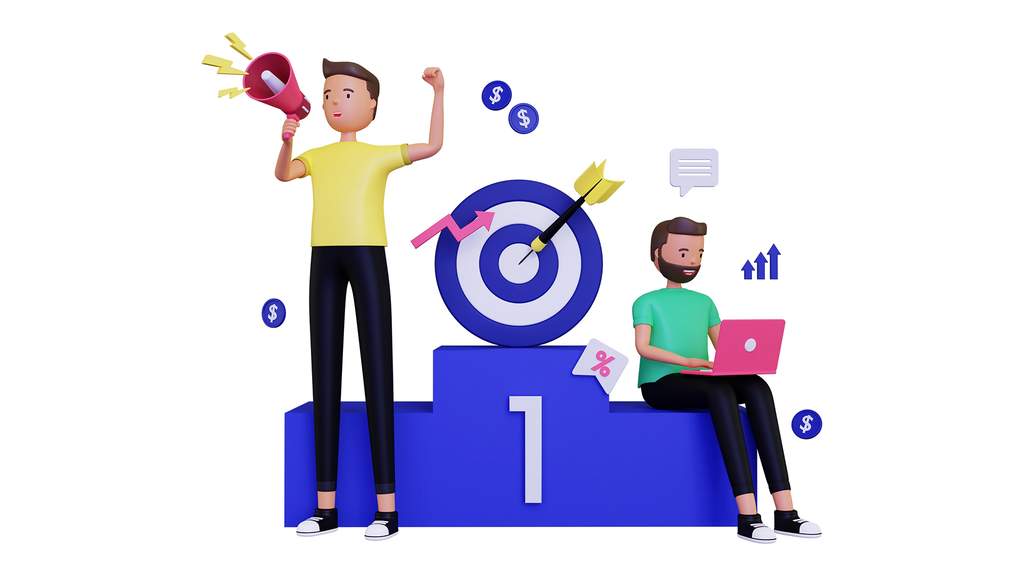
One of the biggest advantages of large advertising budgets is immediate visibility. But small businesses can win through consistency.
SEO takes time. Content takes time. Social media relationships take time. Customer loyalty takes time.
Don’t abandon a strategy simply because it doesn’t explode in two weeks.
Build a marketing system where different channels support each other. Your blog can attract organic traffic. Your social media can build awareness. Your ads can generate immediate leads. Your email campaigns can nurture prospects. Your customer service can turn buyers into advocates.
Together, these activities create something much more powerful than a single advertisement.
Final Thoughts
Small businesses don’t need to outspend big brands. They need to outthink them.
A smart small business marketing strategy combines precise targeting, strong local SEO, useful content, social media engagement, performance advertising, email marketing, and exceptional customer experience.
The real advantage isn’t having the biggest budget. It’s knowing exactly where your budget should go.
When every campaign is measured, every customer interaction matters, and every piece of content has a purpose, even a modest marketing budget can create meaningful growth.
For businesses looking to compete in an increasingly crowded digital marketplace, Adsyzygy can help turn limited marketing resources into focused, performance-driven campaigns. The objective isn’t simply to spend more on advertising—it’s to build a smarter digital marketing strategy that attracts the right audience, generates qualified leads, and creates sustainable business growth.
Leave a Comment