
Introduction
You have selected the right audience, set a reasonable advertising budget, and launched your campaign on platforms like Meta Ads or Google Ads. You wait for the results, expecting more clicks, leads, and sales. However, the numbers do not look promising. Your budget is disappearing, engagement is low, and conversions are nowhere near your expectations. Before blaming your targeting or increasing your advertising spend, take a closer look at your ad creative.
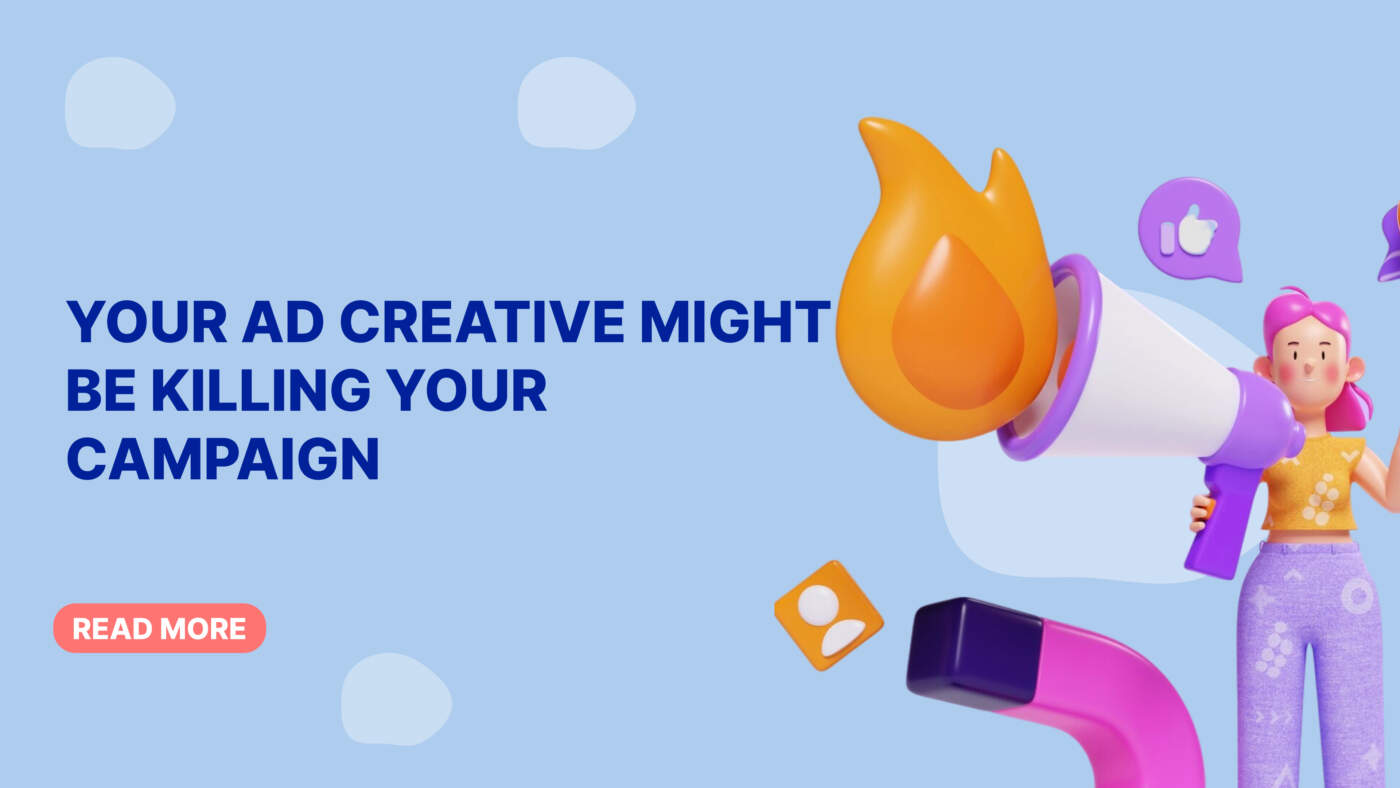
Your ad creative might be killing your campaign without you even realizing it. In digital marketing, an ad creative includes the visuals, videos, headlines, messaging, and overall presentation that people see when your advertisement appears on their screens. It is often the first interaction a potential customer has with your brand, making it a critical part of campaign performance.
Even the most carefully planned advertising campaign can struggle when its creative fails to capture attention or communicate value. People scroll through social media feeds quickly, ignore repetitive advertisements, and rarely spend time understanding a message that does not immediately interest them. If your advertisement looks ordinary, feels irrelevant, or fails to explain why someone should care, your audience may simply move on.
The good news is that creative performance can be improved. By understanding what makes advertisements effective, identifying common mistakes, and testing different approaches, businesses can improve their advertising results without constantly increasing their budgets.

Why Ad Creative Matters More Than You Think
Many businesses believe successful advertising depends primarily on targeting the right audience. Although audience targeting remains important, it cannot compensate for an advertisement that fails to communicate effectively. You might reach thousands of potential customers, but if your creative does not attract their attention, those impressions may generate little value.
Imagine an online clothing store running a campaign targeting fashion-conscious shoppers. The audience is relevant, the budget is sufficient, and the product is attractive. However, the advertisement uses a low-quality image, a generic headline, and no clear reason to purchase. Even interested shoppers may continue scrolling because the creative does not give them a compelling reason to stop.
Now imagine the same product presented through a high-quality lifestyle video, a clear product benefit, and a message that addresses the customer’s needs. The advertisement becomes easier to understand and more interesting to engage with.
This is why ad creative optimization is essential for improving paid advertising performance. Your creative communicates the value of your offer before a potential customer visits your website. It influences whether people notice your advertisement, understand your message, click through, and consider making a purchase.
Creative quality does not guarantee conversions, but it gives your campaign a stronger opportunity to succeed.
Five Signs Your Ad Creative Is Hurting Performance
1. Your Advertisement Is Being Ignored
People encounter countless advertisements every day, especially on Instagram, Facebook, YouTube, and other digital platforms. If your creative looks similar to everything else in the feed, there may be little reason for users to stop scrolling.
Stock images, predictable layouts, generic promotional messages, and overly familiar designs can make your brand difficult to notice. This does not mean every advertisement needs dramatic effects or complicated graphics. Sometimes, a clear visual, an interesting opening, or a relatable situation is enough to capture attention.
Review your advertisement from the customer’s perspective. Would you stop scrolling if you saw it? Can you understand the main message within a few seconds? Does the opening visual create curiosity?
If the answer is no, your creative may need a new approach.
2. Your Click-Through Rate Is Consistently Low
Click-through rate, commonly known as CTR, measures the percentage of impressions that result in clicks. A consistently low CTR can indicate that your advertisement is not giving viewers enough motivation to learn more.
For example, a headline such as “Shop Our Products Today” provides very little information about why someone should click. A more specific message, such as “Upgrade Your Everyday Style With Comfortable New Arrivals,” communicates a clearer benefit.
However, CTR should not be evaluated in isolation. Results vary by platform, campaign objective, industry, audience, and placement. Compare performance against your own historical results and relevant benchmarks rather than assuming that one universal CTR applies to every campaign.
3. Your Audience Stops Responding to Repeated Ads
Creative fatigue happens when people repeatedly see the same advertisement and gradually become less responsive to it. This is particularly common in campaigns that target relatively small audiences or run the same creative for extended periods.
You may notice declining engagement, a falling CTR, rising frequency, or increasing acquisition costs. These signals can suggest that your advertisement needs refreshing, although changes in competition, audience demand, and campaign delivery may also contribute.
Instead of replacing everything immediately, introduce fresh hooks, different visuals, new customer benefits, or alternative video formats. This allows you to identify which changes improve performance.
4. Your Message Does Not Match Your Audience
An advertisement can look professional and still fail because it speaks to the wrong needs.
A first-time customer may need an explanation of the product’s benefits, while an existing customer may respond better to a new collection or complementary product. Similarly, a business owner looking for marketing services may care more about qualified leads and measurable returns than impressive design alone.
Effective ad copywriting begins with understanding your audience. Consider their problems, motivations, objections, and desired outcomes. Then build your creative around a message that feels relevant to them.
5. Your Ad Gets Clicks but No Conversions
High click volume does not automatically mean a successful campaign. If people click your advertisement but leave without purchasing, submitting a form, or completing another desired action, the problem may extend beyond the creative.
Your advertisement might promise something that the landing page does not deliver. Alternatively, unexpected pricing, slow loading speeds, confusing forms, or a lack of trust signals could discourage visitors from converting.
Review the entire customer journey before deciding that the advertisement itself is responsible. Strong advertising connects the promise made in the creative with the experience customers receive after clicking.
The Most Common Ad Creative Mistakes Businesses Make
One of the biggest mistakes is trying to communicate too many things in a single advertisement. Businesses often include every product feature, multiple offers, several headlines, and too many visual elements. The result is a crowded creative that makes the main message difficult to understand.
Another common mistake is focusing entirely on the brand instead of the customer. Your audience is more interested in how your product solves a problem than in hearing how wonderful your company believes itself to be. Instead of simply saying that your service is excellent, explain what customers can achieve by using it.
Poor visual hierarchy can also reduce effectiveness. If the headline, product image, offer, and call to action compete for attention, viewers may struggle to understand what matters most. A strong creative establishes a clear focal point and guides the audience naturally toward the next step.
Finally, many advertisers rely on assumptions instead of testing. A design that looks attractive to your team may not perform well with your audience. Creative decisions should combine good design principles with actual campaign data.
How to Create Ad Creatives That Convert
Improving advertising performance starts with making your message easier to notice, understand, and act upon. Instead of designing advertisements simply to look attractive, build them around a specific customer need and campaign objective.
Start with a strong hook. In video advertisements, the opening seconds should give viewers a reason to continue watching. You could introduce a common problem, demonstrate a product benefit, show a surprising result, or present a relatable customer situation. For static advertisements, a strong visual and concise headline can serve the same purpose.
Next, focus on one primary benefit. If you are advertising a skincare product, explain the relevant benefit rather than filling the creative with every ingredient and feature. If you are promoting digital marketing services, communicate the business outcome you aim to support, such as generating qualified leads or improving advertising efficiency.
Use visuals that support the message. Product demonstrations, real-world applications, customer experiences, and short explanatory videos can help people understand an offer more easily. Maintain readable text, appropriate contrast, and layouts suited to the placements where your advertisements will appear.
Your call to action should also match the customer’s stage in the buying journey. Someone discovering your brand might respond to “Learn More,” while someone ready to purchase may prefer “Shop Now.” Choose a clear next step rather than leaving viewers uncertain about what to do.
Two practical rules can help guide your creative strategy:
- Test different creative concepts: Compare hooks, headlines, images, video formats, offers, and customer benefits to discover which combinations perform best.
- Measure business outcomes: Evaluate conversions, qualified leads, cost per acquisition, and return on ad spend alongside engagement and click-through rate.
Why Creative Testing Is Essential for Better Results
Ad creative optimization is not a one-time task. Customer preferences change, competitors introduce new offers, and advertisements that once performed well can gradually lose effectiveness. Continuous testing helps businesses adapt instead of relying on outdated assumptions.
Begin by identifying a clear hypothesis. For example, you might believe that a product demonstration will generate more qualified traffic than a static product image. Create variations that allow you to evaluate that idea without changing every campaign element simultaneously.
When practical, keep the audience, offer, and other major variables consistent while comparing creative versions. This makes it easier to understand which change may have influenced the results. Avoid drawing conclusions from very small samples or short testing periods, because early performance can fluctuate considerably.
Also, distinguish between creative testing and campaign restructuring. If you change the audience, budget, landing page, and advertisement simultaneously, it becomes difficult to identify the reason for any improvement or decline.
Document your findings, retain effective concepts, and use unsuccessful tests to guide future decisions. A creative that underperforms in one audience or placement may still provide useful insights for another campaign.
How AI Is Changing Ad Creative Optimization
Artificial intelligence is making it easier for marketers to develop and test advertising ideas. AI-powered tools can help generate headline variations, brainstorm video concepts, produce draft ad copy, adapt creative formats, and identify patterns in campaign performance.
For example, an e-commerce brand could use AI to develop different messaging angles for the same product: convenience, affordability, quality, or lifestyle benefits. The marketing team can then refine these ideas and test suitable variations with real audiences.
However, AI-generated content is not automatically effective. Generic wording, unrealistic visuals, inaccurate product claims, and repetitive messaging can weaken trust. Human review remains important to ensure that the creative reflects the brand’s identity, accurately represents the offer, and connects with genuine customer needs.
The strongest approach combines AI’s speed with human judgment. Use automation to explore more ideas, but let campaign evidence and customer understanding guide the final decisions.
Measure Creative Performance Beyond Clicks
A successful advertisement should contribute to a meaningful business objective. While impressions, engagement, and CTR help explain how people interact with your creative, they do not always reveal whether the campaign is generating profitable results.
For e-commerce businesses, useful measurements include conversion rate, cost per purchase, average order value, and return on ad spend. For lead-generation campaigns, marketers should examine cost per qualified lead, lead-to-customer conversion rate, and the revenue generated from acquired customers.
Consider two advertisements. The first attracts many inexpensive clicks but generates very few sales. The second receives fewer clicks but brings in customers who purchase higher-value products. If you focus only on traffic, you might incorrectly assume that the first advertisement is better.
Connect creative performance with the wider conversion funnel wherever possible. This helps you understand whether an advertisement attracts attention, brings relevant visitors to your website, and contributes to revenue.
Remember that campaign performance is influenced by multiple factors, including targeting, pricing, competition, website experience, and sales follow-up. Use these metrics to investigate problems rather than automatically attributing every result to creative quality.

Conclusion
Your ad creative might be killing your campaign, but identifying the problem is the first step toward better advertising performance. Weak visuals, unclear messaging, creative fatigue, irrelevant benefits, and inconsistent customer experiences can prevent even well-planned campaigns from reaching their potential.
The solution is not always to increase your budget or rebuild your entire advertising strategy. Start by understanding your audience, improving your creative message, testing different concepts, and measuring results against meaningful business goals. Give every advertisement a clear purpose, communicate one compelling benefit, and make the next step easy for potential customers.
As AI tools make creative production faster, businesses also have more opportunities to experiment. However, the most effective campaigns will continue to depend on customer understanding, thoughtful execution, and data-driven decisions.
At adsyzygy, the focus is on helping businesses approach digital advertising with performance, strategy, and measurable growth in mind. By combining creative thinking with continuous optimization, brands can build campaigns that do more than attract attention. They can turn relevant attention into valuable customer relationships and sustainable business results.
Leave a Comment