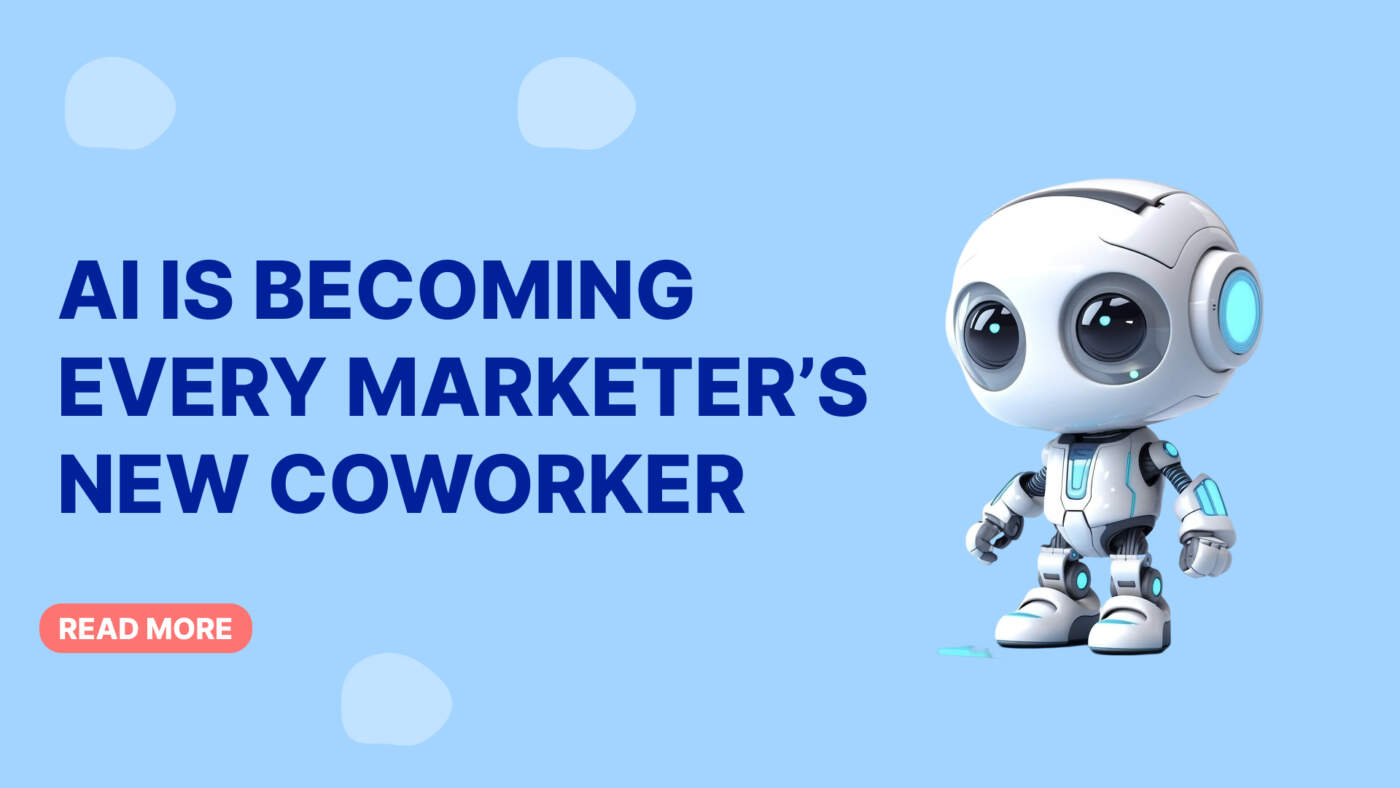

Artificial intelligence is no longer something marketers can simply watch from the sidelines. It has quickly become part of everyday marketing work, helping teams research audiences, create content, analyze campaigns, generate ideas, automate repetitive tasks, and make faster decisions. In 2026, AI is becoming less like a futuristic technology and more like a new coworker sitting alongside marketers every day.
The interesting part is that AI is not necessarily replacing the marketer. Instead, it is changing what marketers spend their time doing. Tasks that once took hours can now be completed in minutes, while marketers can focus more on strategy, creativity, customer relationships, and business growth. This shift is creating a new kind of marketing workflow where humans and AI work together.
For businesses, this also means digital marketing is becoming faster, more personalized, and increasingly data-driven. Marketers who understand how to work with AI can potentially move faster than teams relying entirely on traditional processes. The real question is no longer whether AI belongs in marketing. The question is how marketers can use it effectively without losing the human side of their work.

Why AI Is Becoming a Marketing Coworker
Think about what a typical marketer does during a working day. They may begin by checking campaign performance, researching competitors, looking for content ideas, reviewing customer behavior, creating social media posts, writing emails, preparing reports, and communicating with different teams.
Many of these activities are repetitive and time-consuming. AI can now assist with several of them.
An AI marketing tool can summarize large amounts of data, identify patterns, suggest content ideas, generate first drafts, organize information, and help marketers explore different strategies. Instead of starting from an empty document or spreadsheet, marketers can use AI as a starting point.
This is similar to having a junior coworker who is always available to help with research and repetitive work. The marketer still needs to provide direction, review the output, make decisions, and understand the bigger business objective.
That distinction is important. AI can generate an answer, but marketers need to decide whether that answer actually makes sense for the brand and its audience.
AI Is Changing the Way Marketers Work
One of the biggest changes AI brings to digital marketing is speed. Traditional marketing workflows often involve several stages before something is ready to publish. Research may take hours, content planning may take another few hours, and analyzing previous campaign results can take even longer.
AI can reduce the time required for many of these initial tasks.
For example, a marketer launching a new product could use AI to brainstorm customer segments, identify possible messaging angles, develop content themes, and create initial campaign concepts. The marketer can then review these ideas and choose the strongest direction.
This does not mean the entire campaign should be handed over to AI. Instead, AI becomes part of the workflow.
The marketer provides the context. AI helps process information and generate possibilities. The marketer evaluates those possibilities and turns them into a strategy.
This human-AI collaboration is likely to become one of the defining characteristics of modern marketing teams.
AI and Content Marketing
Content marketing is one of the areas where AI has created the biggest change. Marketers can use AI to brainstorm blog topics, create outlines, rewrite content, generate social media ideas, develop email variations, and adapt content for different audiences.
However, producing content is not the same as producing valuable content.
The internet is already filled with generic articles and repetitive AI-generated posts. Simply using AI to create more content does not guarantee better marketing results. Brands still need a clear point of view, useful information, strong storytelling, and an understanding of what their audience actually wants.
The smartest marketers are using AI to improve their content process rather than allowing AI to completely control it.
For example, AI can generate ten potential headlines, but the marketer should choose the one that best matches the brand. AI can suggest a blog structure, but the marketer should add original insights and real examples. AI can help rewrite a paragraph, but the final content should still sound natural.
The goal is not to make content sound like AI. The goal is to use AI to help marketers create better content more efficiently.
AI Is Making Personalization Easier
Customers increasingly expect brands to understand their needs. Generic marketing messages are becoming less effective because consumers are exposed to thousands of advertisements and pieces of content every day.
AI can help marketers analyze customer behavior and create more personalized experiences.
For example, an e-commerce brand can use customer data to understand browsing behavior, purchase history, product interests, and engagement patterns. AI can then help marketers identify potential customer segments and develop different messaging strategies.
This can make marketing campaigns more relevant.
Instead of sending exactly the same message to everyone, businesses can create different experiences based on customer interests and behavior.
AI-powered personalization can influence email marketing, product recommendations, advertising, website experiences, and customer communication. When used responsibly, it can help brands communicate with customers at the right time and with more relevant messaging.
AI and Performance Marketing
Performance marketing is another area where AI is becoming increasingly important.
Paid advertising platforms already use machine learning to optimize campaigns, identify potential customers, allocate budgets, and improve ad delivery. Marketers are therefore moving away from manually controlling every small campaign setting and toward managing broader strategic goals.
This changes the role of the performance marketer.
Instead of spending most of the day making small adjustments, marketers can focus more on creative strategy, audience insights, offer development, landing-page optimization, and overall return on investment.
AI can help identify patterns in campaign data, but marketers still need to understand why a campaign is working.
A campaign might generate more clicks because of a strong creative, but those clicks are not necessarily valuable if they do not produce conversions. This is why marketers must connect AI-powered optimization with real business metrics such as leads, sales, customer acquisition cost, conversion rate, and revenue.
AI can help marketers move faster, but the business objective should remain the center of the strategy.
AI Can Help Marketers Understand Data
Marketing generates an enormous amount of data.
There are website visits, impressions, clicks, engagement rates, conversion rates, customer journeys, advertising costs, sales figures, email performance, and many other metrics. Looking at all of this information manually can become overwhelming.
AI can help marketers identify patterns and summarize large datasets.
Instead of spending hours searching through reports, marketers can ask AI to help explain changes in performance or highlight unusual trends. This can make marketing analytics more accessible to teams that may not have advanced data-analysis skills.
However, marketers should not blindly trust automated conclusions.
Data still needs context.
A sudden drop in conversions could be caused by an advertising problem, a website issue, a pricing change, seasonal demand, or another external factor. AI can identify the pattern, but the marketer needs to investigate the reason behind it.
This is where human judgment remains extremely valuable.
AI Is Not a Replacement for Creativity
One of the biggest concerns surrounding AI in marketing is whether it will replace creative professionals.
The reality is more complicated.
AI can generate ideas, images, scripts, headlines, and concepts at remarkable speed. But creativity is more than generating options. Strong marketing creativity comes from understanding culture, people, emotions, business problems, and brand identity.
A human marketer understands why a particular message may connect with an audience.
AI can help generate possibilities, but marketers decide which ideas deserve attention.
The best results often happen when marketers use AI to remove creative limitations rather than replace creativity. Instead of spending three hours generating basic concepts, a creative team can use AI to produce initial directions and spend more time developing the strongest idea.
That creates more room for strategic creativity.
AI Can Become the Marketer’s Research Assistant
Research is another area where AI can become extremely useful.
Before launching a campaign, marketers need to understand customers, competitors, trends, keywords, products, and market opportunities. AI can help organize research and generate questions marketers may not have considered.
For example, an SEO professional could use AI to brainstorm keyword clusters and content topics. A social media manager could use it to identify potential content themes. A performance marketer could use it to analyze campaign patterns and explore new audience angles.
But research still needs verification.
AI-generated information can be inaccurate, outdated, or based on incomplete context. Professional marketers should validate important information before using it in business decisions.
AI should therefore be treated as a research assistant, not an unquestionable source of truth.
Two Ways Marketers Can Work Better With AI
The most successful AI-powered marketing teams will probably not be the ones using the most tools. They will be the teams that use the right tools for the right problems.
Two practical principles can help marketers get started:
- Use AI for repetitive work: Research organization, first drafts, data summaries, content variations, reporting, brainstorming, and routine marketing tasks can often be accelerated with AI.
- Keep humans responsible for strategy: Brand positioning, final decisions, customer understanding, creative direction, ethical considerations, and business strategy should remain under human control.
This balance allows businesses to gain the efficiency of AI without losing the personality and judgment that make marketing effective.
The Rise of the AI-Powered Marketing Team
As AI becomes more capable, marketing teams may start looking very different from traditional teams.
A small marketing department could potentially accomplish work that previously required a much larger team. AI tools can support content creation, advertising analysis, customer research, SEO, email marketing, reporting, and creative development.
This does not necessarily mean companies will need fewer marketers.
Instead, the responsibilities of marketers may evolve.
Marketers may become more focused on strategy, decision-making, experimentation, customer psychology, and creative direction. Technical knowledge of AI tools may become another important marketing skill alongside SEO, advertising, analytics, content creation, and communication.
The marketer of the future may not compete with AI. They may compete with marketers who know how to use AI better.
What Businesses Should Do Next
Businesses should not adopt AI simply because everyone else is talking about it. The better approach is to identify where marketing teams are losing time and determine whether AI can solve those problems.
Start with simple workflows.
Look at repetitive reporting, content research, campaign analysis, customer segmentation, or content planning. Test AI in one area, measure the results, and improve the workflow based on what works.
It is also important to establish clear quality standards. AI-generated content should be reviewed before publication. Customer data should be handled responsibly. Important business decisions should not be made solely from automated recommendations.
The companies that benefit most from AI will likely be the ones that combine technology with strong marketing fundamentals.
The Future of Marketing Is Human + AI
AI is changing marketing, but it is not eliminating the need for marketers. Instead, it is creating a new working relationship between technology and people.
Tomorrow’s marketer may have an AI research assistant, AI content partner, AI analytics helper, and AI campaign support system working alongside them. These tools can make marketers faster and help them manage more complex workloads.
But the most important marketing questions will remain human.
What does the customer actually need? What problem are we solving? Why should someone choose this brand? What message will build trust? Does this campaign generate meaningful business results?
AI can help marketers explore those questions faster, but humans still need to provide the answers.

Conclusion
AI is becoming every marketer’s new coworker, and this shift is already changing the way digital marketing works. From content creation and SEO to performance marketing, personalization, analytics, and research, AI can help marketers save time and make faster, more informed decisions.
But the future is not about choosing between AI and human marketers. It is about combining the strengths of both. AI brings speed, scale, automation, and data-processing power, while humans bring creativity, empathy, strategic thinking, judgment, and brand understanding.
For businesses that want to stay competitive, learning how to build this partnership will become increasingly important. At adsyzygy, we believe modern marketing should combine technology, performance, creativity, and business-focused strategy. AI may become the marketer’s newest coworker, but the smartest marketers will remain the ones who know how to make that coworker work toward real growth and measurable results.
Leave a Comment